Intrast
Intrast

For Science students at UBC

If you are in Science at UBC, you are trained to think carefully, test assumptions, and follow evidence where it leads.


You are also being trained inside a system that quietly assumes a stable pipeline:
undergraduate → lab → graduate school → specialization.


That assumption is becoming fragile.
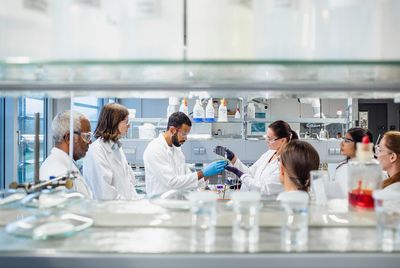
The pressure science students are under

AI is already changing how scientific work is done.


Data analysis is faster.
Literature review is automated.
Pattern detection scales.
Routine research tasks are compressing.


This does not make science less important. 

It makes narrow scientific roles easier to substitute and harder to access.


At the same time...


...academic positions remain scarce

...industry roles are competitive and opaque

...many science skills do not translate cleanly without context
 

This leaves many science students highly capable, but unsure where they actually fit.

Why science networking often fails

Science networking is usually:


  • hierarchical
  • slow-moving
  • limited to labs, supervisors, or conferences
     

That structure works if you stay on one path.
It fails if you need to pivot, recombine skills, or explore applied work.

Many science students end up isolated between:


  • what they are good at
  • and where that ability is needed
     

That gap is not about intelligence.
It is about visibility and connection.

What resilience looks like for scientists now

Resilient science careers are built laterally. They belong to people who:


  • connect across disciplines early
  • apply scientific thinking outside formal research roles
  • stay legible beyond a single lab or method
  • can move between academia, industry, and community work
     

Those moves do not happen through job boards.
They happen through people.

intrast, for science students

intrast gives science students a way to be seen outside narrow pipelines.


It lets you...


...surface your skills beyond your immediate discipline

...find people working on real problems who need scientific thinking

...explore applied or interdisciplinary paths safely

...stay connected to peers whose paths diverge from yours
 

You are not broadcasting expertise.
You are making yourself findable to the right contexts.

How science students tend to use intrast

Science students often use intrast to:


  • connect with applied projects outside formal labs
  • find collaborators across faculties
  • test alternative paths without abandoning their training
  • maintain continuity as cohorts fragment
     

It creates optionality without forcing commitment.

You do not need to abandon science to remain relevant

What you need is a way to apply scientific thinking beyond a single pipeline, and to stay connected.

intrast helps you carry your training with you as roles shift, labs change, and paths diverge. It keeps your skills legible to real people working on real problems, not just to institutions that may or may not have room for you.

Before you need a network, it’s already here.

Download intrast for AndroidDownload intrast for IOS

Copyright © 2026 intrast - All Rights Reserved.

Email: contact@intrastapp.com

  • Home
  • Our History
  • Newsletter
  • intrast Privacy Policy
  • CSAM
  • Donate

This website uses cookies.

We use cookies to analyze website traffic and optimize your website experience. By accepting our use of cookies, your data will be aggregated with all other user data.

Accept